

How kids earn real independence through competence and community.
We didn’t expect such a positive response to our last blog, Beyond Screens, Beyond Camp. Families wrote back because we named something that’s rarely addressed: outdoor education can’t just be a brief alternative to screens. If kids’ social lives exist online, “go outside” can feel like a punishment, not a pull. Families don’t need a better camp, they need better third spaces. Possibly, a real-life “family village” or “social lodge” strong enough to compete with the feed: one with good companions, shared meaning, and the quiet pride of being useful.
A number of parents also honed in on one other thread: independence. Not the slogan, but the real thing. How do you raise capable kids without pretending it’s easy?
Beyond “Optimizing” Kids
Modern zeitgeist can turn childhood into a project management system: reduce risk, anticipate every emotional weather front or deliver the perfect response. It’s exhausting for adults and brittle for kids. This is what we mean by optimization: the belief that you can engineer the perfect childhood if we just manage every variable.
Optimization makes a subtle claim that children are incapable subjects to be managed, rather than capable contributors who can grow strong through real complexity: social complexity, outdoor complexity, emotional complexity. The result is predictable. We train kids to depend on adult calibration, and then we wonder why they don’t feel confident without it.
At Trackers, we make a different bet: kids can navigate a lot more than modernity leads us to believe, especially when they’re given real responsibility, real skills, and a real community that expects curiosity from them. But I understand, believing that doesn’t automatically make “letting go” feel good.
“Letting Go” Is Hard!
I’ve spent years watching kids become competent outdoors. I’ve raised my own kids inside this culture. And still, there are moments that tighten my gut for my three children.
Sure… go wander the 351 acres of Camp Roslyn. Go roam Camp Trackers at the edge of the vast Bull Run wilderness.
Even with all my belief in independence, there’s always a quiet, skepticism in my brain: what if? It’s not fair to tell parents they should simply “trust our kids” through willpower. Something has to be true before letting go becomes reasonable.
The Missing Ingredient
This was the line from our last blog families quoted back to us most:
What I’ve learned from my own children and thousands of Trackers kids is this: independence stops feeling risky when competence is real. I let my kids explore the wild because they know how to move through woods safely, find their way home, build shelter, cook outdoors, track animals, forage wild plants, and watch each other’s backs. With the skills of a Tracker, freedom feels natural, not reckless.
That’s the hinge. Not bravery. Not vibes. Not “confidence.” Competence.
And here’s the part we only hinted at before: it’s unfair to expect families to build that competence alone. Not because parents don’t care, but because skill-building doesn’t come from lectures. It comes from culture: repetition, shared expectations, wise mentors, and peers who normalize capability. In other words, competence spreads the way language spreads. Through immersion.
A “Culture” for Skill-Building
I’m not saying the answer is “buy another program.” Trackers can be one part of the solution, but the point is larger than camp. The real shift happens when families build competence together through shared adventures: foraging for wild food and cooking meals, fishing trips, learning orienteering together, and even handing forward the nearly new outdoor gear that your tween just grew out of.
The village is most powerful when we, as parents, collectively share what we know. That’s not “nature time.” That’s building and sharing family character. The village matters because it changes the baseline. It makes it normal for kids to be trusted, because it’s normal for kids to learn essential survival skills. Outdoor organizations have a responsibility here too. Our role is to run more than good programs, but to help families connect beyond camp and offer a blueprint for how competence becomes the foundation of freedom.
Four Tools For Independence
Below are four practices we use with kids at Trackers. They’re simple, not trendy. They work because they treat children as capable while still being responsible about safety.
- High expectations through real tools: We reject the idea that kids can’t handle risk. Instead of “pretend” skills, we teach real ones: carving knives, bows, saws, and more. When adults teach clearly, supervise wisely, and hold consistent standards, kids rise.
- Radical independence for personal needs: Trackers are expected to handle their basic needs so adults can share skills, not hover. We call it the Three Essentials:
- Follow safety directions independently.
- Manage your own gear, clothing, and food.
- Learn to tolerate being cold, wet, or thirsty sometimes, enough to build grit and good judgment.
If a child struggles, we assist. But we hold the expectation of progress (not perfection). Our aim is the independence of a “country backyard” 100 years ago: capable play, capable exploration.
- From “Me” to “We”: Optimization trains kids to see the world as a customer relationship: my needs, my preferences, my comfort. A village teaches something older and sturdier—that you belong to a group and your presence matters. Kids work in teams, contribute meaningfully, and grow faster because they’re needed. In our Leader-in-Training (LIT) camps, tweens and teens become force multipliers: supporting younger kids, modeling competence, and stabilizing culture.
- Embracing unpredictability: In an optimized world, everything is controlled. Nature is the opposite. We use weather as a teacher, not a reason to cancel. Kids learn to adjust with layers, hydration, pace, mindset, rather than expecting the environment to bend to them. Our kids love our motto: “Nature Doesn’t Give a Fox.” The Trackers Fox has become a symbol of something important — the beauty of nature isn’t comfort. It’s the way high expectations help you discover you’re capable.
The Real Invitation
Independence isn’t something we demand from kids, it’s something we build together as a community. None of us should have to manufacture courage alone in our living room. Instead, we do this through competence and a shared culture that normalizes responsibility.
The invitation for families remains: let’s build a third place where kids (and family) practice the skills that make freedom feel honest. One where adults share what they know, children carry real responsibility, and community makes the risk feel smaller because the competence becomes bigger.
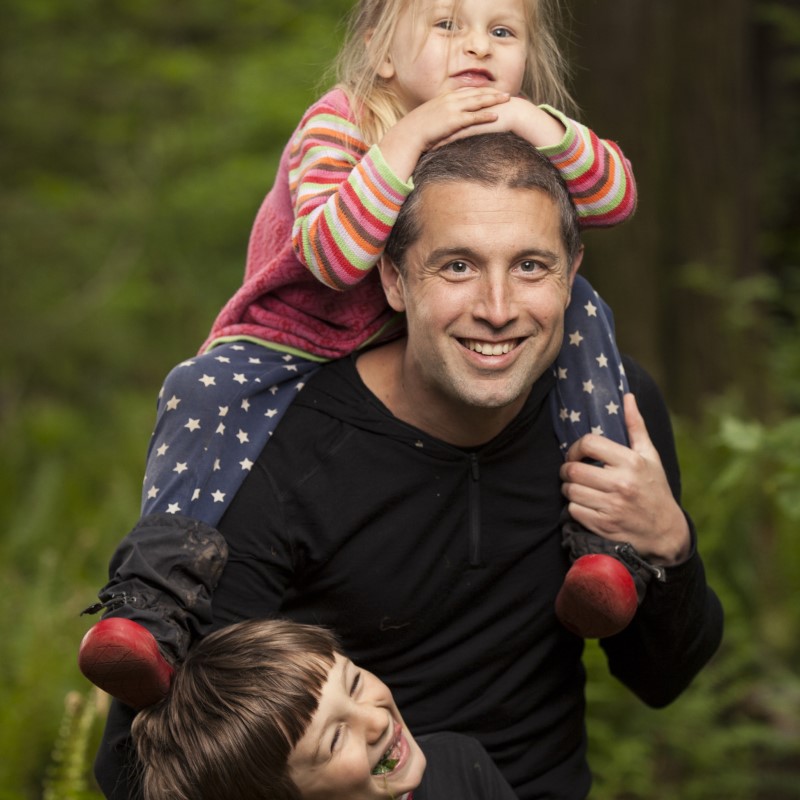
See you in the forest,
Tony Deis
Trackers Earth
Founder & Dad
Let’s Go Beyond Camp
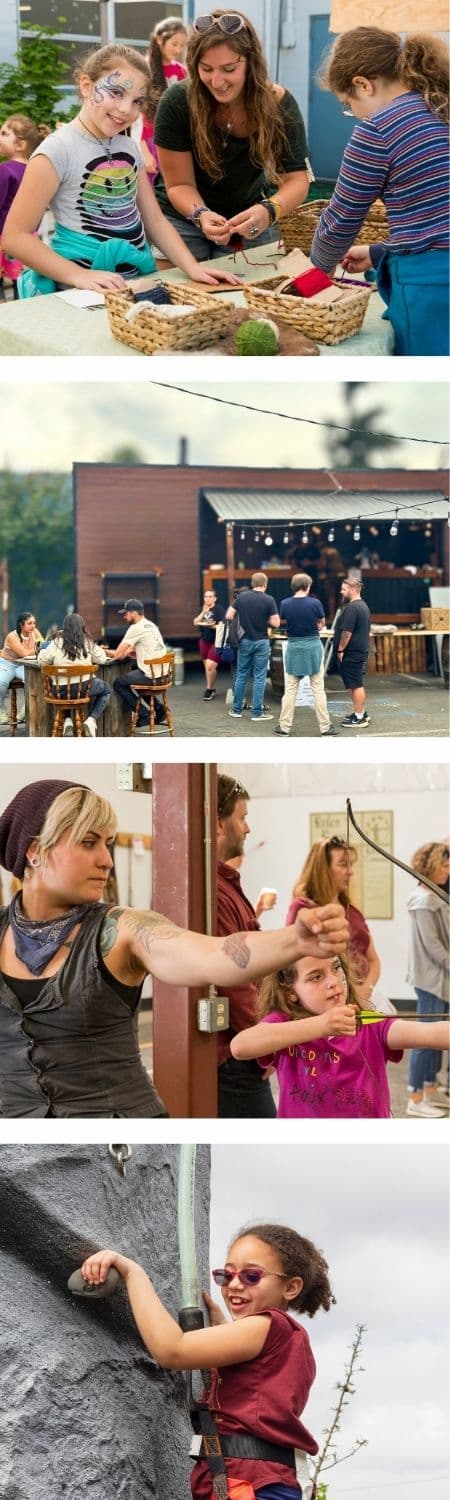
Screens pull kids in because that’s where their friends are. The answer isn’t just “less screen time”—it’s building real-world networks where kids develop competence, find purpose, and earn independence with peers. Three ideas we’re considering:
Create an After-School Archery League: Intensive training where kids build competitive archery skills, track progress, and connect with a team beyond camp.
Form Weekly Trackers Teams Co-ops: Guides partner with parents to facilitate independent Trackers Teams for skills after school (a cooperative, not a program).
Converting Trackers SE into a Family Lodge: A gathering place for families to connect with food carts, archery, bouldering, axe throwing, fire pits, and play spaces.
P.S. We’re seeking architects and place designers to help envision this third space. We are even considering mini-golf. Reach out to help shape what’s next: hello@trackersearth.com.
e