Why kids need more than entertainment. They need good reasons to grow up.
Before you read: I get plenty of backtalk when I ask my kids to help with the dishes in the middle of binge-watching Parks & Rec for the twelfth time (though Amy Poehler rocks). As parents, we all struggle with the mixed messages the modern world hands us. None of us will ever be perfect, but we do have the right to expect more from the world we are passing on to our kids. I hope you’ll read this as inspiration towards values we can work toward together.
– Molly Deis, Founder & Mom
For all of human history kids had a real place in the work of their families and communities. They fetched water, tracked the herds, cared for goats (mine still do), tended fires, and helped cook meals. When they wandered the forest, they might fish for dinner, bring home berries for preserving, or gather plants their elders needed.
Their help mattered. They were Truly Helpful and they knew it.
Today, we’ve constructed a separate world of children’s entertainment. And our society has put ourselves, the internet, and corporations in charge of keeping that hamster wheel going. We’ve become so accustomed to organizing childhood around activities and amusement that we can forget how much kids have to offer.
We treat childhood as something so precious that we forget it’s something we’re meant to grow from. Childhood is also practice for becoming an adult, becoming someone who cares for family, community, and the world around them. And we’ve now made adulthood sound like a terrible thing to put off. We joke about “adulting” as though cooking, cleaning, and caring for others are miserable interruptions to our real lives. Is it any wonder kids would rather stay kids?
Everyone needs a break. But I want my kids to know that cooking with family, tending to our animals, and welcoming guests can be part of a life they actually want to live. I worry modernity imbues a perpetual adolescence, where someone else is always supposed to provide the fun, clean up, and make life interesting for us.
When Play Becomes Separate from Life
Even outdoor education can miss the mark. Whole programs are built around free play, sometimes with a philosophy of expecting very little from kids beyond following their own interests.
I believe in free play. My own children have spent countless hours roaming fields and forests with nothing better to do. They’ve built forts, invented games, followed animal trails, and disappeared into their own imagined worlds. That freedom matters.
When we tell children to finish helping so they can finally have free play, we teach them that caring for others is something to get through before the good part begins.
But the work of contribution can be a playful joy. Why do we keep separating play from the work of living?
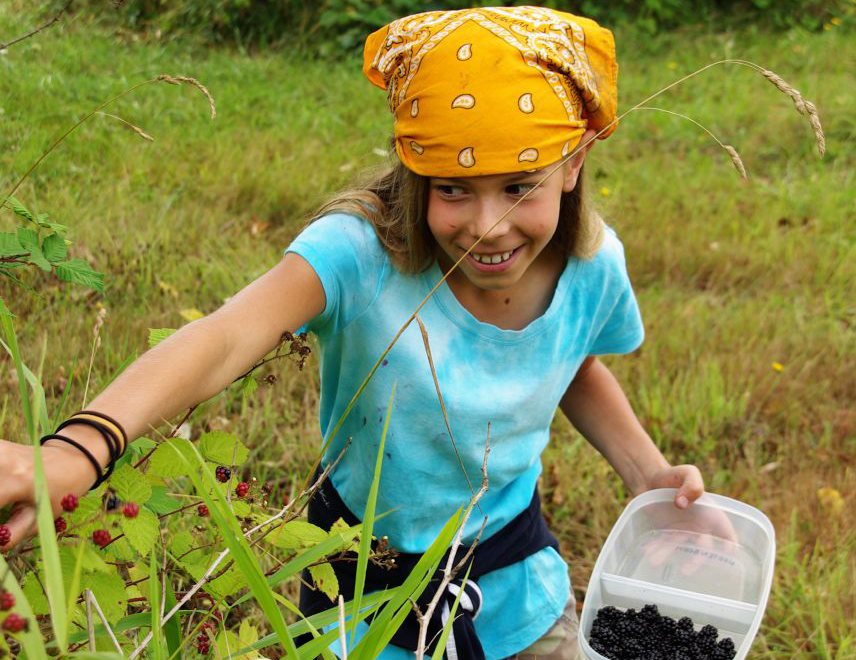
A child picking blackberries can wander, explore, invent games, and bring home food to preserve for winter. A child building a fire can enjoy the challenge and give an elder somewhere warm to sit. Play can happen between the work and in the middle of it.
Of course, some work is tedious. Sometimes caring interrupts what we’d rather be doing. But that doesn’t make it optional. I’ve encountered this at camp. I’ll ask a student to pick up a piece of plastic they dropped or help wash dishes after a campfire meal they cooked. Sometimes a kid responds, “But can’t we just free play?”
Not while your lunchable plastic litters the forest floor.
And why should our Guides clean up after kids who are perfectly capable of helping? They’re teachers, not their butler. The same should be true of our schools. Children can help care for the buildings, classrooms, and outdoor places that make their learning possible.
Cooking and even eating a meal includes washing the dishes. Using a classroom means sweeping your mess. Enjoying a campfire includes gathering wood and extinguishing it. Caring for our places is part of learning. There’s a difference between children who are always waiting for someone to announce free play and children who discover that helping can be an adventure of its own.
Kids will be kids. They’ll grumble, get distracted, make mistakes, and sometimes need reminding. But that’s how adults can set expectations. Not just “because I said so,” but because we can show them how their contribution serves others.
Freedom Grows with Skill
At Trackers, we teach old-school outdoor skills because they lead to greater freedom. When you know how to dress for the weather, build a fire, make a shelter, find your way, or gather food, you can stay, play, and work longer in the forest. You become more capable of caring for yourself and others.
We have a saying at Trackers: “To know a thing is to honor it.” The more you learn about the forest, its creatures, its seasons, and its needs, the more you become more than just a visitor. You become someone who can guide others into it, share what you’ve learned, and take responsibility for its care. The more you represent all that lives in the wilderness.
In our Wilders Guild, we call our commitment to caretaking Being Truly Helpful.
It’s when kids pick blackberries for jam, help catch and cook invasive crawdads, care for farm animals, keep track of where the elk herd moved this week, or help prepare a winter fire that also serves the land. But it also means knowing when not to harvest. A child growing up close to nature should know the creatures and plants that live there. Which berries can we gather without taking food other animals need? Which plants should we leave alone? They know what this place needs from us to grow well.
That’s stewardship. And it takes knowledge, attention, and practice.
Our Guides teach those skills while helping kids become part of a community with real expectations and growing responsibility. Being Truly Helpful isn’t about keeping kids busy with invented chores. It’s about doing something that genuinely matters to someone beyond themselves. And something wonderful happens when kids realize their help is needed.
They begin noticing things. The woodpile is low and they ask a younger kid to help. The chickens need water and they just do it. Someone left garbage along the trail so they pick it up. They start looking for ways to contribute, sometimes with the same excitement they bring to a game.
They play at being caretakers until they become caretakers. They play at the work as younger kids watch them as role models. That’s what I want my kids to grow into. Not adults who see responsibility as the end of their freedom, but adults who find greater freedom and joy in what they’re capable of doing for others.
What Can We Do?
My plan for all the family meals this holiday season? My kids are cooking with me and getting the house ready for guests. They’ll help plan the meals, prepare food, clean the house, set the table, and welcome everyone who comes through the door.
The winter bird feeder will be their responsibility too. They’ll choose a spot where our guests can enjoy watching the birds, keep it stocked, and make sure it stays clean and healthy for the visitors with feathers. They’ll also help care for our farm animals and welcome the kids who come to camp. Those kids are their guests and friends too.
And their days will still be full of play. They’ll hang out with the sheep in the barnyard, name the winter baby chicks, wander the fields tracking coyotes, and roam the forest looking for materials to build a bow drill. Some of that play will lead to useful work. Some of the work will turn into play. Some work will still feel boring. We don’t need to divide every hour into one or the other.
But here’s what I want them to understand: Our family gatherings aren’t just about them.
They’re about younger children, elders, weary adults, fellow campers, unexpected guests, and everyone we hope to connect with. When we make children the center of every gathering, are we teaching them to become adults who believe the world should revolve around them?
I want my kids to experience something much better. The joy of bringing people together and knowing they played an important part. The gathering itself becomes the reward, worth more than anything they could have earned just for themselves. None of us need a farm or a forest to do this. Kids can help plan a meal, cook it, set the table, welcome visitors, and clean up afterward. If family lives far away, invite friends over and let your kids help host.
And I’m not planning to turn all of this into another special activity just for my kids. Sometimes they’ll get to choose what they’re doing. Other times, I’ll need them to put down what they’re doing and help. That’s part of being in a family.
When one of my kids carries a chair over for an elder and brings them a plate of food, I’ll say thank you.
And I hope that elder returns the favor with a funny story about our family, maybe one about what I was like when I was young. That’s how children become part of something that began long before they were born and will continue long after us. They learn that belonging isn’t about being the center of attention. It’s about having a place in the lives of others.

See you in the forest,
Molly Deis
Trackers Earth
Founder & Mom
P.S. If you’d like to share some of that community with us, come join us. We’ll gather, share skills, swap stories, and enjoy being together.
In Portland, my kids will be at both of these, helping out and doing their part to welcome everyone. We’d love to see you there.
In the Bay Area, our families are gathering at Camp Herms for a Holiday Faire of their own, with crafts, archery, a cookie contest and a winter bonfire.